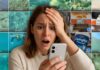


Have you ever been faced with a difficult decision when choosing a restaurant or hotel? It's likely that you have. It's also likely that you've checked Google reviews from previous guests who've been there before you to help you decide.
Consumer reviews, a vital issue in digital marketing
With the digital revolution, online reviews have become a crucial issue for businesses. The ratings left by users of their products or services can have a significant impact on their reputation and turnover. Positive reviews can allow a company to significantly differentiate itself, attract new customers and increase sales, while bad ratings can be the source of damage that is difficult to repair.
For a potential customer, online reviews can help to avoid bad shopping experiences and find the best deals, so it’s important that they can trust them. Except that this isn’t always the case. With the rise in popularity of online reviews on Google, it’s become common to see fake reviews on the platform. These reviews can be posted by organized groups, dissatisfied customers, or even by business owners themselves.
This phenomenon has grown in recent years, making it increasingly difficult for users to trust posted reviews. In 2020, TripAdvisor identified 3.6% fake reviews out of the 26 million posted on the site. It therefore becomes crucial to know how to detect fake reviews to avoid being deceived.
What the law says
In France, online reviews have been governed since 2016 by Article L111-7-2 of the Consumer Code. According to this, any entity allowing the publication of reviews on the internet is responsible for verifying their origin and authenticity. Furthermore, the publication of false reviews is punishable by € 75 fine for an individual and €375 for a company.
In practice, however, it is extremely complex for the administration to verify each of the tens of thousands of reviews posted online every day, and to obtain certainty of their authenticity or dishonest nature.
Polygraph, the Ministry of Economy's tool to combat fake reviews.
It is in this context that the General Directorate for Competition, Consumer Affairs and Fraud Control (DGCCRF), a public administration dependent on the Ministry of Economy and Finance, announced the upcoming implementation from a software called PolygraphDeveloped by the General Directorate for Competition, Consumer Affairs and Fraud Control (DGCCRF), this ambitious tool, which takes its name from the famous lie detector device, will be used to detect suspicious opinions on the Internet, to allow DGCCRF agents (the only ones who will be authorized to use it, since Polygraphe will not be made available to businesses or consumers) to put an end to these unfair practices.
The software's action will follow three fundamental axes:
- First of all, Polygraph will collect the data it deems necessary on platforms and websites offering consumer reviews. This information may include the text of the review as well as details about the company posting the reviews or the user who posted the review.
- Then the software will have to analyze the extracted data in order to identify suspicious content using indicators that will have been defined by investigators from the fraud squad, but which have not yet been made public.
- The results collected by Polygraph will then be sorted and displayed through an ergonomic interface for investigators, who will thus be able to make a final decision as to the contents concerned.
However, the question of the legality of Polygraphe's recovery of users' personal data arises at this level. For the time being, the National Commission for Informatics and Liberties (CNIL) considered that the uses made of the tool were in accordance with the law. But the Constitutional Council could be put on alert and limit, for example, the collection and use of some personal information, in the name of citizens' right to privacy and the protection of fundamental individual freedoms.
Against fake reviews: be careful!
It is therefore difficult, for the moment, to say precisely what Polygraphe will change and whether it will really embody the revolution that its creators at the DGCCRF are hoping for in the face of false opinions.
In the meantime, the most effective methods for spotting fake reviews may still be personal research and vigilance. Google also invites its users to check a series of points during their searches to differentiate an authentic opinion from a fake one:
- Pay attention to the difficulty of the words used;
- Analyze the name and avatar of the reviewer;
- See if he has reviewed other places, products or businesses;
- Pay attention to details;
- Report reviews that do not contain comments